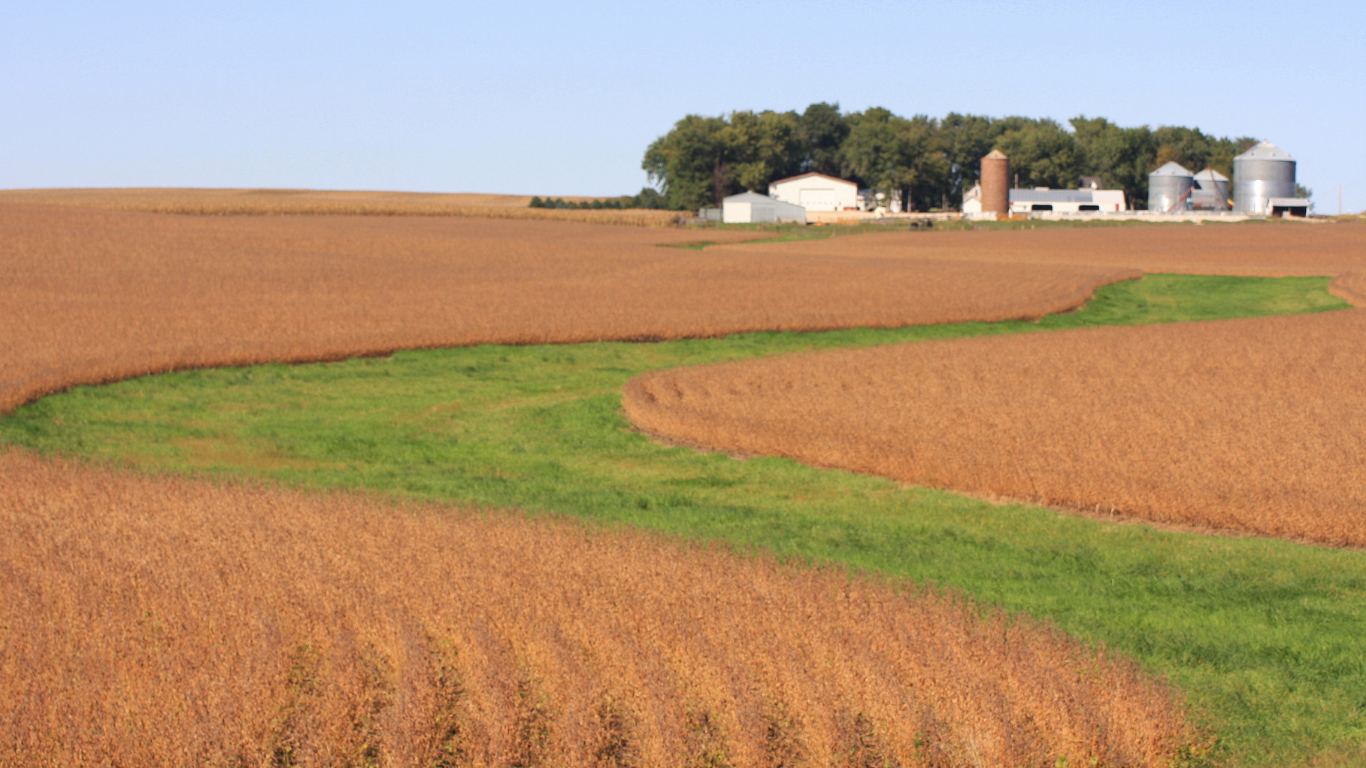
Soil Erosion Control

| Practice Details

Soil erosion can be a real problem on some fields. Whether from wind, rain, or snow, you could be loosing tons of sediment on every acre. That soil ends up in our waters and carries nutrients with it, which degrades water quality. There are many different practices that can be used to help stop soil erosion, or help to treat runoff that carries high levels of sediment.

USES: WASCOB, Slope Stabilization, Grassed Waterway, & Sediment Basin

INCENTIVE TYPE: 100% Implementation Cost

NRCS STANDARDS: Critical Area Planting (342), Sediment Basin (350), Grade Stabilization Structure (410), Water & Sediment Control Basin (638), Grassed Waterway (412)
Incentive Rates & Uses

Description: Establishing vegetation on acres with high rates or erosion or that have been/will be distrubed.

  • Example Use: Slope Stabilization, Gully Correction, or Bank Stabilization
  • Practice Type: Engineered
  • Incentive Rate: Cost of Implementation
    • This Includes the Total Cost of: Technical Assistance, Construction, Permitting, Environmental Evaluation, Cultural Surveying, and Practice Design
  • Practice Lifespan: 10 years
  • Land Incentive: 10 years of county-average rental rate OR land value if tied to easement

Description: Structure used to control the volume of water and grade to reduce soil erosion. Commonly located at end of Grassed Waterway or similar practice.

  • Example Use: Stable Outlet Creation
  • Practice Type: Engineered
  • Incentive Rate: Cost of Implementation
    • This Includes the Total Cost of: Technical Assistance, Construction, Permitting, Environmental Evaluation, Cultural Surveying, and Practice Design
  • Practice Lifespan: 15 years
  • Land Incentive: 15 years of county-average rental rate OR land value if tied to easement

Description: Creation of shallow waterway, planted with dense vegetation, used to control flow of water in field resulting in a reduction in soil erosion and gullying.

  • Example Use: Grassed Waterway
  • Practice Type: Engineered
  • Incentive Rate: Cost of Implementation
    • This Includes the Total Cost of: Technical Assistance, Construction, Permitting, Environmental Evaluation, Cultural Surveying, and Practice Design
  • Practice Lifespan: 10 years
  • Land Incentive: 10 years of county-average rental rate OR land value if tied to easement

Description: Creation of basin used to capture and treat sediment-filled runoff water.

  • Example Use: Sediment Basin or ARTS (Agricultural Runoff Treatment System)
  • Practice Type: Engineered
  • Incentive Rate: Cost of Implementation
    • This Includes the Total Cost of: Technical Assistance, Construction, Permitting, Environmental Evaluation, Cultural Surveying, and Practice Design
  • Practice Lifespan: 20 years
  • Land Incentive: 20 years of county-average rental rate OR land value if tied to easement

Description: Structure that controls flow of and captures runoff for treatment. WASCOBs are commonly build in a series.

  • Example Use: WASCOB
  • Practice Type: Engineered
  • Incentive Rate: Cost of Implementation
    • This Includes the Total Cost of: Technical Assistance, Construction, Permitting, Environmental Evaluation, Cultural Surveying, and Practice Design
  • Practice Lifespan: 10 years
  • Land Incentive: 10 years of county-average rental rate OR land value if tied to easement

Ready to enroll?

Get in touch with Fox-Wolf Watershed Alliance or your County Land Conservation Department to get started!

We will walk you through the application process and help you figure out what practices best fit your needs and goals.

Fox-Wolf Watershed Alliance

  • (920) 840-0104
  • Conservation@fwwa.org
  • 526 W Wisconsin Ave, Suite 2E, Appleton, WI

This material is based upon work supported by the U.S. Department of Agriculture, under agreement number NR233A750004G071. Any opinions, findings, conclusions, or recommendations expressed in this publication are those of the author(s) and do not necessarily reflect the views of the U.S. Department of Agriculture. In addition, any reference to specific brands or types of products or services does not constitute or imply an endorsement by the U.S. Department of Agriculture for those products or services. USDA is an equal opportunity provider, employer, and lender.